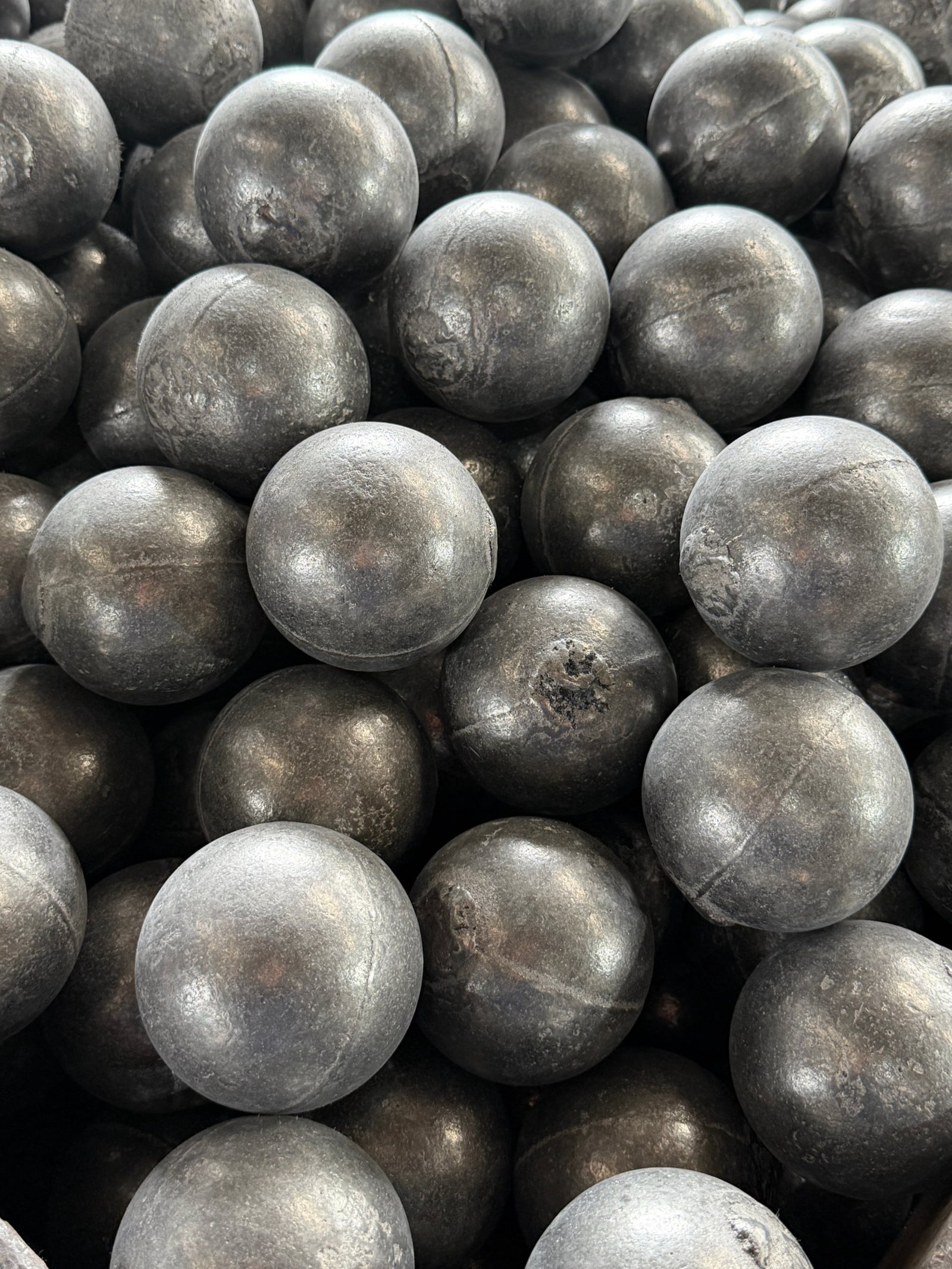
Forged Grinding Balls
Grinding Media · Forged Steel Series

Impact Engineered. Heat Treated. Alliance Verified.

Forged grinding balls engineered for high-impact SAG and primary ball mill environments. Where cast media breaks, forged media performs. Every batch heat-treated to specification and cleared through the Alliance 21-Point Quality Protocol.

Manufacturing Process:

Hot Forging + Heat Treatment

Diameter Range:

Ø25mm – Ø150mm

Core Hardness

Full Cross-Section Verified

02 // Technical Data

Technical Specifications

Parameter Value Notes
Manufacturing Process Hot forgring Continuous rolling or hammer forging
Steel Grade Medium-to-High Carbon Customized per application
Diameter Ø25mm – Ø150mm Common: Ø40, 50, 65, 80, 100, 125mm
Surface Hardness 55 – 65 HRC Verified by Rockwell mapping
Core Hardness Consistent through cross-section No soft-core failure mode
Breakage Rate ≤ 1% Significantly below cast media norms
Heat Treatment Quench + Temper Real-time curve monitoring
Grain Structure Aligned / Forged No internal voids or porosity

Forged ball diameter, steel grade, and heat treatment profile are specified to your mill's impact energy profile and ore characteristics. For SAG mill applications, billet chemistry and forging parameters are adjusted to prioritize toughness over hardness. Submit your mill data and current scats rate — we'll identify whether forged media is the right call for your specific circuit.

03 // Where It Works

Application Guide

Gold & Copper Mining

Optimised hardness profiles for SAG and ball mill circuits processing hard-rock sulphide ores with high abrasion indices.

Iron Ore Processing

High-chrome formulations engineered for corrosive slurry environments typical in magnetite and hematite beneficiation circuits.

Cement Grinding

Consistent density and roundness tolerances reduce energy consumption and extend liner service life in closed-circuit cement mills.

Lithium & Battery Materials

Ultra-low contamination alloys qualified for lithium spodumene and battery-grade mineral processing applications.

Technical Notes

WHY FORGING MATTERS

Casting Creates Balls. Forging Creates Performance.

The mechanical difference between a cast and a forged grinding ball is not a matter of specification — it’s a matter of physics. Forging aligns the grain structure of the steel, eliminating the internal voids and porosity that make cast balls susceptible to fracture under high-impact loading. The result is a ball with fundamentally superior toughness characteristics — not because of chemistry, but because of process.

In SAG mill environments, where steel balls are subjected to repeated high-energy impacts against rock and mill shell, that toughness difference determines whether your media contributes to grinding or contributes to your scats pile.

Alliance manages the full forging and heat treatment process — from billet chemistry verification through final hardness mapping — ensuring that every ball that arrives at your mill was built to perform under your specific loading conditions.

SPECIFICATIONS

Forged Grinding Ball — Specification Matrix

Parameter Specification Notes
Manufacturing Process Hot Forging Continuous rolling or hammer forging
Steel Grade Medium-to-High Carbon Customized per application
Diameter Ø25mm – Ø150mm Common: Ø40, 50, 65, 80, 100, 125mm
Surface Hardness 55 – 65 HRC Verified by Rockwell mapping
Core Hardness Consistent through cross-section No soft-core failure mode
Breakage Rate ≤ 1% Significantly below cast media norms
Heat Treatment Quench + Temper Real-time curve monitoring
Grain Structure Aligned / Forged No internal voids or porosity

FORGED VS. CAST — CHOOSING THE RIGHT MEDIA

When Does Forged Outperform Cast?

When to specify forged media:

  • SAG Mill primary charge— high-impact loading demands toughness over pure hardness
  • Primary ball mills on hard rock ores— where breakage in cast media creates downstream problems
  • Operations experiencing high scats rates— often caused by media fracture, not ore characteristics
  • Remote operations— where replacement logistics make breakage events disproportionately costly
  • LTA supply environments— forged media offers more predictable consumption rates for long-term planning

When high-chrome cast media may be preferred:

  • Secondary and tertiary ball mills— lower impact, higher abrasion profile
  • Cement grinding— controlled environment, fine grinding focus
  • Cost-per-ton optimization is primary— when ore characteristics allow

Our engineering team will recommend the optimal media type — or combination — for each stage of your grinding circuit. This is a system-level decision, not a product selection.

QUALITY PROTOCOL

The Alliance Standard Applies Here Too.

Every forged ball shipment passes the same 21-Point Alliance Quality Protocol as our high-chrome cast media. Independent spectrometric verification of billet chemistry. Real-time heat treatment monitoring. Full Rockwell hardness mapping — surface and cross-section. CMM dimensional verification. Batch traceability report on delivery.

The forging process eliminates many of the failure modes inherent in casting — but only if the process parameters are controlled correctly. We monitor them. You don’t have to.
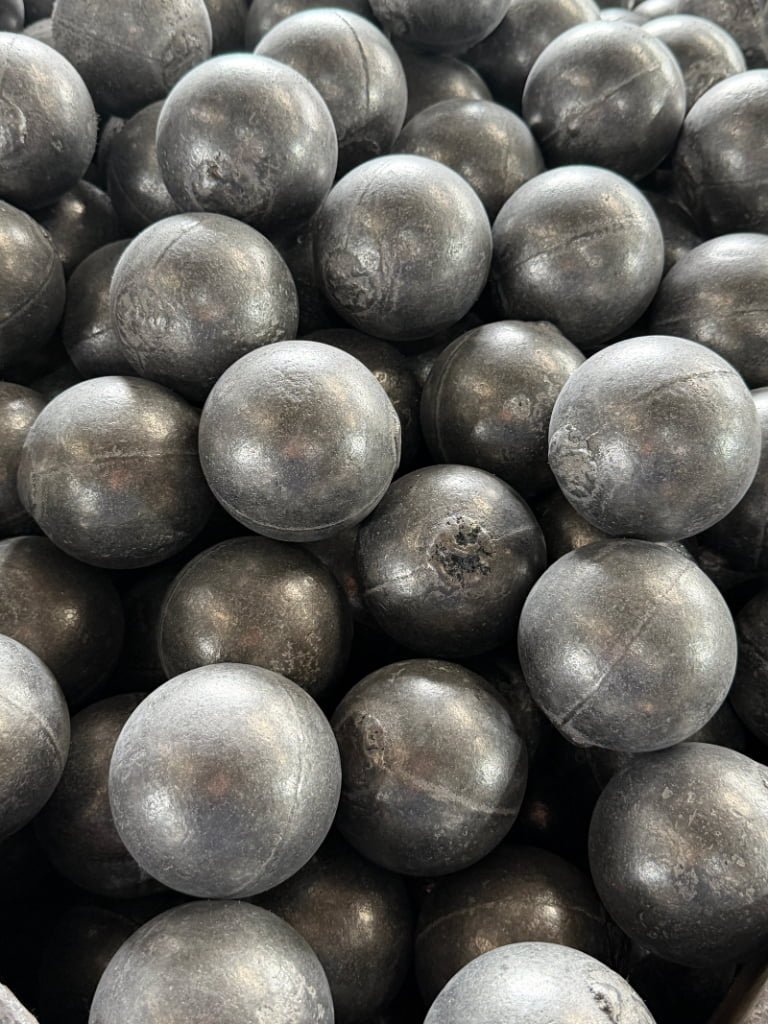
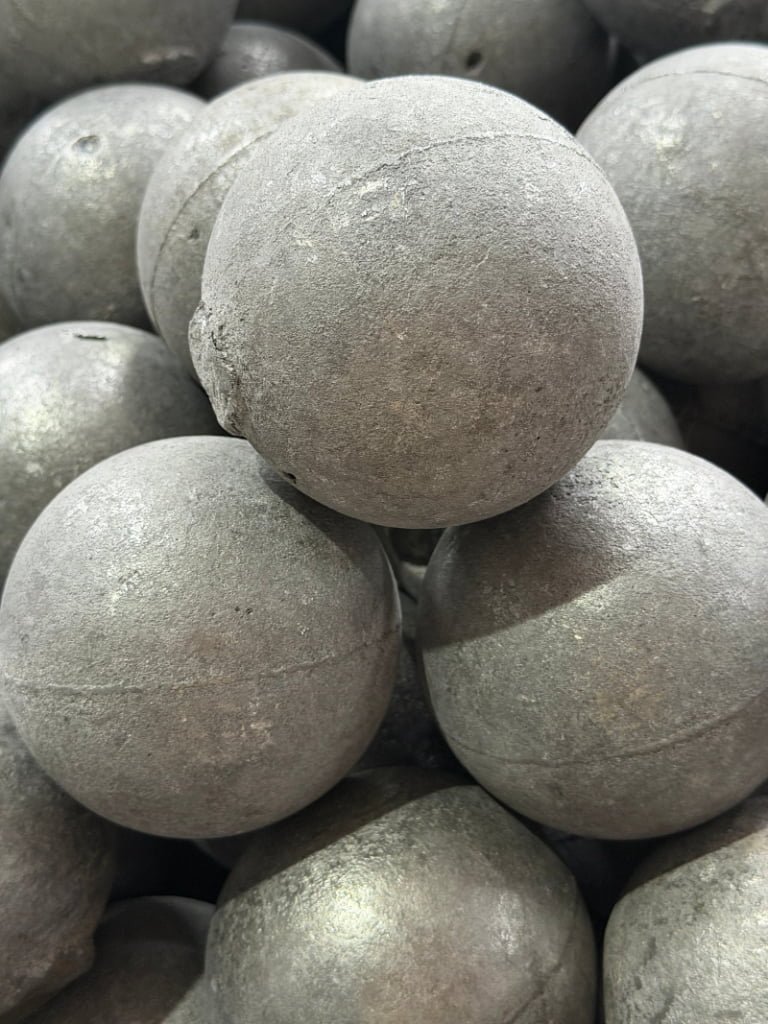
 

04 // Quality Assurance

Your Assurance Comes From Independence, Not Factory Self-Reporting.

Every forged ball shipment passes the same 21-Point Alliance Quality Protocol as our high-chrome cast media. Independent spectrometric verification of billet chemistry. Real-time heat treatment monitoring. Full Rockwell hardness mapping — surface and cross-section. CMM dimensional verification. Batch traceability report on delivery.The forging process eliminates many of the failure modes inherent in casting — but only if the process parameters are controlled correctly. We monitor them. You don't have to.

01

Stage 1 — Pre-Production

  • Billet chemistry verification (OES spectrometry — carbon, manganese, trace elements)
  • Steel grade confirmation against approved specification
  • Forging parameter sign-off (temperature range, reduction ratio)
  • Heat treatment protocol approval before production commences
02

Stage 2 — In-Process

  • Induction heating temperature monitoring (billet temp recorded per run)
  • Forging process verification (continuous rolling or hammer forging parameters)
  • In-line quench temperature and timing verification
  • In-process dimensional sampling against diameter tolerance
03

Stage 3 — Pre-Shipment

  • Rockwell hardness mapping — surface HRC (mapped, not spot-checked)
  • Cross-section hardness verification — core HRC confirmed (eliminates soft-core failure mode)
  • CMM dimensional inspection (diameter tolerance, roundness)
  • Impact resistance test per batch
  • Full batch traceability report issued with shipment

Protocol: Alliance 21-Point Quality Protocol

05 // Track Record

Numbers That Come From Mines, Not Brochures.

≤0.5%

BREAKAGE RATE

Achieved in Tier-1 mine trials. Industry average exceeds 2%.

3,000+

TONS ANNUAL EXPORT

Managed under the same protocol that passed MMG Tier-1 audit.

1,000+

CONSECUTIVE DAYS SUPPLIED

West Africa Tier-1 Lithium LTA. Zero supply interruptions.

Tell Us About Your Mill and We'll Engineer the Match.

Mill diameter, speed, ore SG, F80, current media consumption — give us the numbers and we'll return a matched media specification and cost-per-ton benchmark..

Signed NDA Guarantee • 100% IP Protection