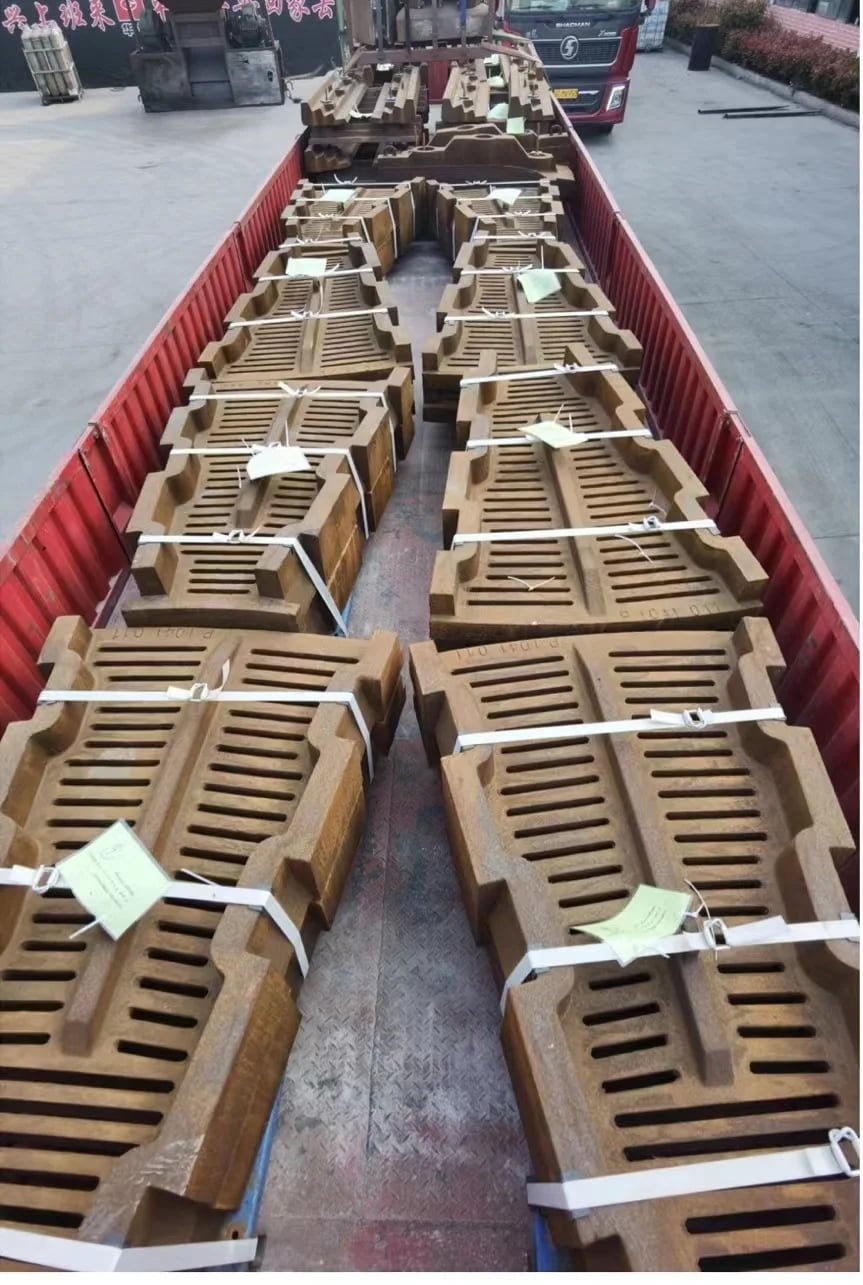
Mill Liners
Wear Parts · Mill Liner Series

The Liner Is Not a Commodity. It's Half the Circuit.

A mismatched mill liner doesn't just wear out faster — it undermines the performance of every ball in your charge. Alliance engineers liners matched to your specific ore hardness, mill geometry, and rotation speed, then manages the full quality process from foundry through delivery.

Alloys

High-Manganese · Chrome-Moly · Custom

Applications

SAG Mills · Ball Mills · Rod Mills

Design Basis

Ore Profile + Mill Geometry

QC

21-Point Alliance Protocol

02 // Technical Data

Technical Specifications

Parameter Value Notes
Alloy High-Mn (Mn13–18) / Cr-Mo / Custom Selected per ore profile
Profile Wave · Rib · Grid · Plate Engineered per mill geometry
Weight Per design Balanced for installation safety
Hardness (Cr-Mo) 48–58 HRC Application dependent
Hardness (Mn Steel) Work-hardens from 220–550 HBN Impact-dependent in service
Chemical Verification OES Spectrometry Independent, pre-shipment
Dimensional Tolerance Per design drawing CMM verified
Surface Inspection Visual + PT/MT Per critical surfaces

10:58Claude responded: Liner alloy grade, profile geometry, wave height, and face angle are engineered to your specific mill dimensions, rotation speed, ore hardness, and feed size.Liner alloy grade, profile geometry, wave height, and face angle are engineered to your specific mill dimensions, rotation speed, ore hardness, and feed size. Where Alliance supplies both liners and grinding media, specifications are co-engineered as a system — liner profile matched to ball size and charge ratio for circuit-level optimization rather than component-level procurement.

03 // Where It Works

Application Guide

Gold & Copper Mining

Optimised hardness profiles for SAG and ball mill circuits processing hard-rock sulphide ores with high abrasion indices.

Iron Ore Processing

High-chrome formulations engineered for corrosive slurry environments typical in magnetite and hematite beneficiation circuits.

Cement Grinding

Consistent density and roundness tolerances reduce energy consumption and extend liner service life in closed-circuit cement mills.

Lithium & Battery Materials

Ultra-low contamination alloys qualified for lithium spodumene and battery-grade mineral processing applications.

Technical Notes

THE INTEGRATION PRINCIPLE

You Can’t Optimize One Half of the Circuit.

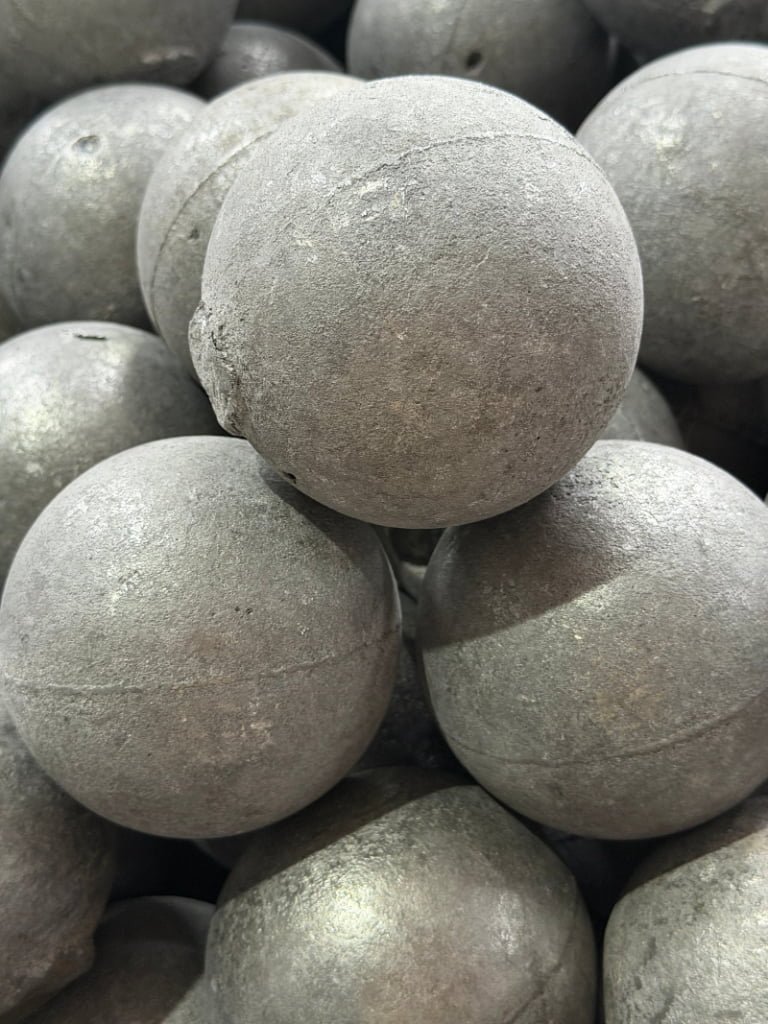
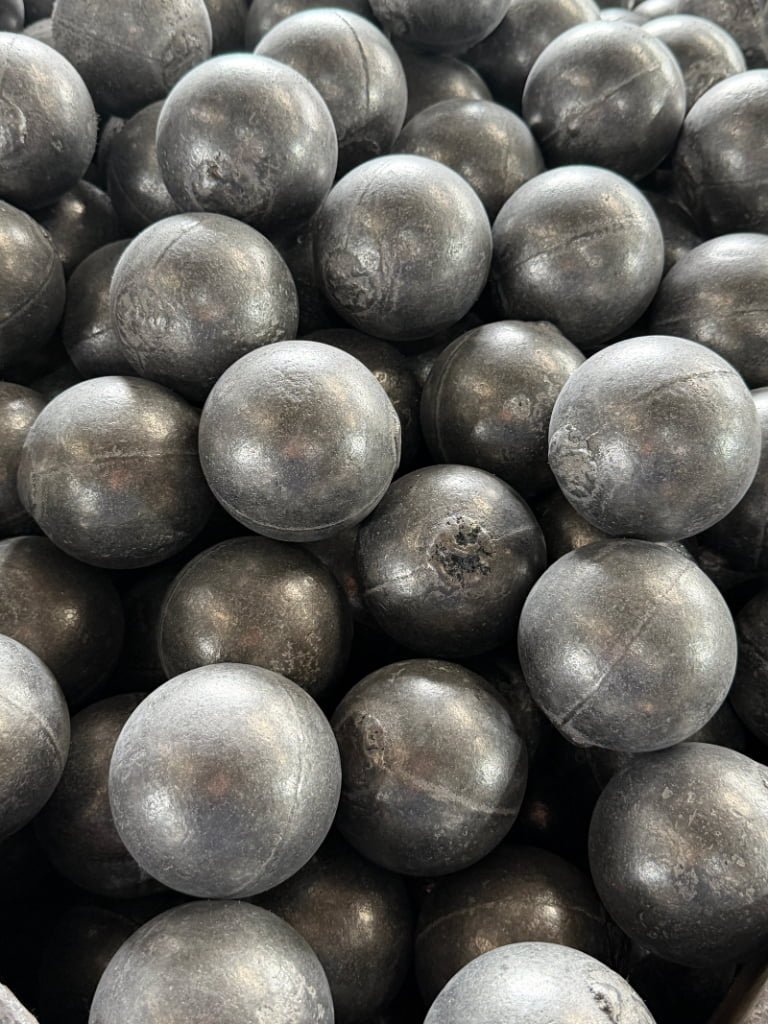
The grinding media and the mill liner are not independent systems. They are mechanically coupled. The liner profile determines how balls are lifted, how they cascade, and where they land. A flat, worn liner profile means balls are sliding instead of cascading — and your energy-per-ton is rising while your throughput is falling.

Alliance is one of very few suppliers that simultaneously manages both grinding media and mill liners. This means we can optimize the system — not just the components. We design liner profiles that work with the specific ball size, charge ratio, and mill speed we’re supplying, and we track wear rates on both systems so we can make data-driven adjustments over time.

This is what we mean by circuit-level optimization. It’s the difference between procurement and engineering.

ALLOY SYSTEMS

Material Selection Starts With Your Ore.

High-Manganese Steel (Mn13–Mn18)

The workhorse of impact-dominant applications. High-manganese steel work-hardens under impact loading, developing progressively higher surface hardness as the liner is put into service. Ideal for SAG mills and primary ball mills processing hard, coarse-feed ores. Excellent impact toughness. Economical at scale.

Best for: SAG Mills · Primary Ball Mills · High-SG Ores

Chrome-Moly Steel (Cr-Mo)

Higher initial hardness than manganese alternatives, with excellent abrasion resistance. Preferred for fine-grinding ball mill applications where abrasive wear is the dominant failure mechanism and impact loading is moderate. Longer service life in the right application; more brittle if misapplied in high-impact environments.

Best for: Secondary Ball Mills · Fine Grinding · Medium-Hard Ores

Custom Alloy Formulations

For extreme wear environments or specific ore chemistries, we develop customized alloy specifications in collaboration with our foundry partners. Applications include highly corrosive slurry environments, extreme abrasive ores, and operations where standard alloys have demonstrated suboptimal performance.

DESIGN & ENGINEERING PROCESS

From Ore Data to Liner Profile.

Step 1 — Application Data Collection Mill dimensions (diameter × length), rotation speed (RPM and % critical), ore hardness (Bond Work Index or equivalent), feed size (F80), current liner profile and service life data.

Step 2 — Metallurgical & Profile Selection Based on application data, we recommend alloy grade, liner profile geometry (wave, rib, grid, plate), and lifting angle. Profile selection directly impacts ball trajectories and grinding efficiency.

Step 3 — Foundry Manufacturing & QC Manufacturing at our alloy liner foundry partner, operating under Alliance quality oversight. Full spectrometric analysis, hardness verification, dimensional inspection per the 21-Point Protocol.

Step 4 — Installation Support Documentation Detailed installation sequence, torque specifications, and break-in guidance. We don’t assume your team has seen this profile before.

Step 5 — Wear Rate Tracking We track consumption data across service intervals and use it to refine specifications on the next order. Your liner program improves over time, not just at contract renewal.
 

04 // Quality Assurance

Your Liner Program Is Only as Good as the Independence Behind It.

Mill liner quality failures are invisible until they're expensive — premature wear, unexpected profile collapse, or alloy inconsistency that only shows up after installation. Alliance's independent verification sits between the foundry and your mill, with no financial interest in passing a bad batch.

01

Pre-Production

  • Alloy chemistry verification (portable OES spectrometry)
  • Raw material source traceability confirmation
  • Heat treatment protocol sign-off against approved procedure
  • Pattern and dimensional drawing approval
02

In-Process

  • Pour temperature and chemistry monitoring
  • Heat treatment cycle verification (time + temperature recorded)
  • In-process dimensional sampling against drawing tolerances
03

Pre-Shipment

  • Final hardness verification (Brinell HBN — surface mapped, not spot-checked)
  • CMM dimensional inspection against approved drawing
  • Visual and surface inspection (critical faces and bolt hole zones)
  • Individual piece marking and batch traceability assignment
  • Full batch traceability report issued with shipment

Protocol: Alliance 21-Point Quality Protocol

05 // Track Record

Numbers That Come From Mines, Not Brochures.

≤0.5%

BREAKAGE RATE

Achieved in Tier-1 mine trials. Industry average exceeds 2%.

3,000+

TONS ANNUAL EXPORT

Managed under the same protocol that passed MMG Tier-1 audit.

1,000+

CONSECUTIVE DAYS SUPPLIED

West Africa Tier-1 Lithium LTA. Zero supply interruptions.

Start With Your Mill Data. We'll Engineer the Rest.

Submit your mill dimensions, current liner specification, ore type, and service life data. We'll conduct a free technical review and propose a matched liner program with a total cost-of-ownership comparison.

Signed NDA Guarantee • 100% IP Protection