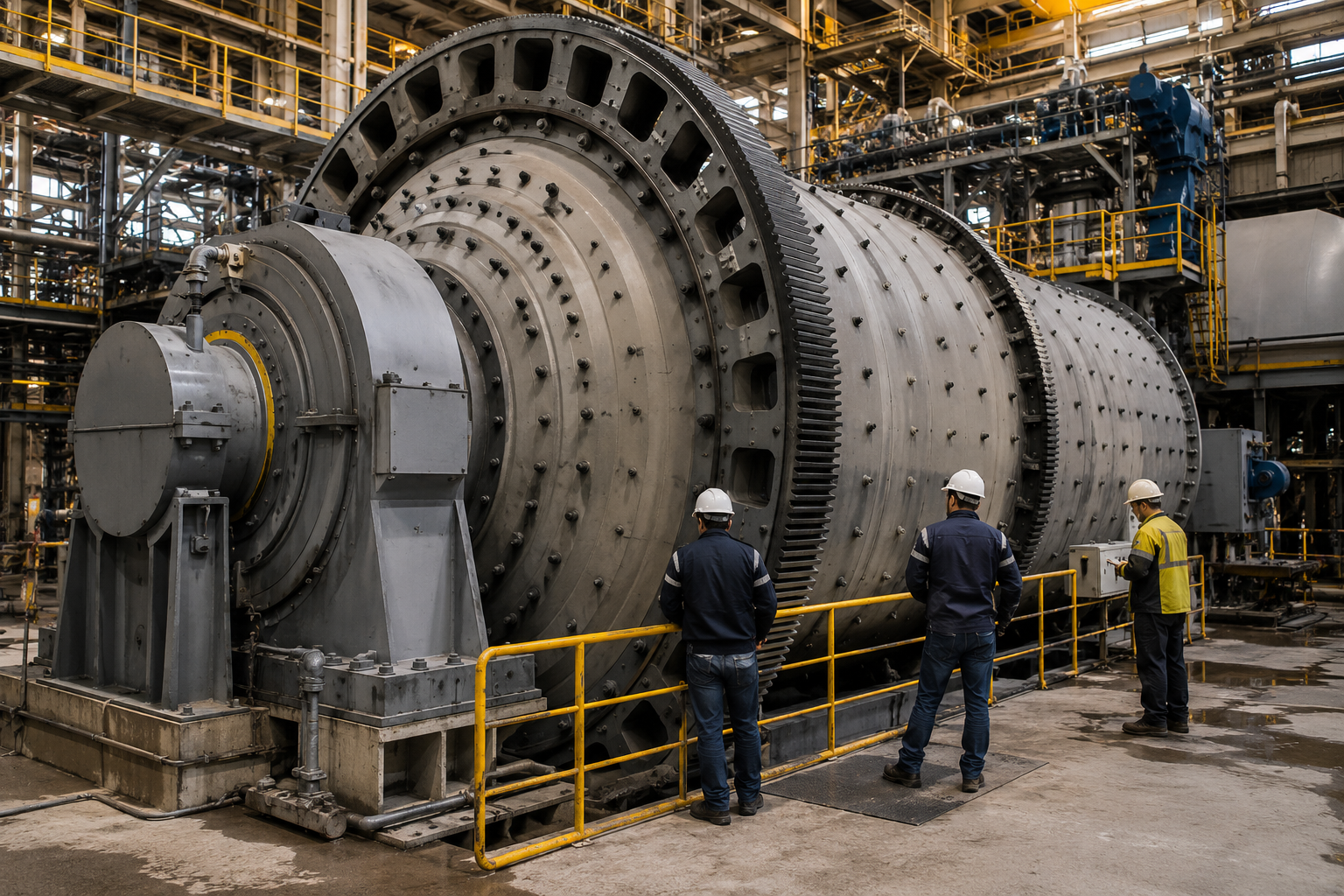
Lessons from Mining Projects: How Grinding Media, Mill Liners, and Classification Systems Must Work Together Before Startup
In mining projects, significant attention is often given to equipment selection, installation schedules, and construction milestones. However, one of the most overlooked stages is the validation of the grinding circuit before full-scale production begins.
Many operational issues that emerge after startup—including excessive grinding media consumption, abnormal liner wear, unstable throughput, poor particle size distribution, and unplanned shutdowns—can often be traced back to insufficient system validation during commissioning.
Based on more than a decade of experience working with mining operations and grinding media applications, I have observed that successful concentrators share one common characteristic: they invest time in validating the complete grinding system before production starts.
The Grinding Circuit Is a System, Not a Collection of Components
A common misconception is that grinding balls, mill liners, ball mills, hydrocyclones, pumps, and classification equipment can be optimized independently.
In reality, these components operate as a single integrated system.
Key variables include:
- Grinding media size distribution
- Ball hardness and wear characteristics
- Mill liner profile and lifting performance
- Mill operating speed
- Ore characteristics
- Pulp density
- Cyclone operating pressure
- Classification efficiency
A change in any one variable can influence the performance of the entire circuit.
This is why selecting grinding media solely based on catalogue specifications or historical experience often fails to deliver optimal results.
Why Pre-Commissioning Validation Matters
Before a plant enters commercial operation, commissioning provides a unique opportunity to identify and eliminate performance risks.
Validation testing can help operators:
Optimize Grinding Media Charge Design
Different ore types require different grinding strategies.
Testing various ball size distributions helps determine the most efficient balance between impact breakage and fine grinding.
Evaluate Liner Performance
Mill liners influence charge motion, energy transfer, and wear patterns.
Early evaluation helps prevent premature liner failures and excessive maintenance costs.
Verify Classification Efficiency
Cyclones and classification systems play a critical role in controlling product size distribution.
Commissioning tests help ensure that the grinding circuit achieves design targets.
Reduce Operational Risk
The cost of several weeks of validation testing is often significantly lower than the cost of unexpected downtime after startup.
The Hidden Cost of Skipping Validation
Many mining operations attempt to accelerate startup schedules in order to achieve production targets more quickly.
While understandable, this approach can create significant long-term risks.
Common consequences include:
- Excessive grinding media consumption
- Premature liner replacement
- Reduced throughput
- Lower recovery rates
- Increased maintenance frequency
- Unplanned shutdowns
In many cases, these issues could have been identified and corrected during the commissioning phase.
Beyond Product Supply: The Role of a Grinding Media Partner
At APG MINEX, we believe grinding media suppliers should contribute more than product delivery.
The most valuable suppliers help customers:
- Understand grinding circuit interactions
- Analyze wear performance
- Evaluate operating conditions
- Share lessons learned from other mining operations
- Support long-term optimization initiatives
The objective is not simply to supply grinding balls.
The objective is to support stable, efficient, and sustainable plant performance.
Successful grinding circuits are rarely the result of a single product decision.
They are the result of careful validation, data-driven optimization, and close collaboration between plant operators, equipment suppliers, and technical partners.
The most effective grinding ball is not necessarily the one specified on a drawing.
It is the one proven through testing, operating data, and real-world performance.
For mining companies planning a new concentrator project or optimizing an existing grinding circuit, investing time in pre-commissioning validation can often deliver returns far beyond the initial cost.