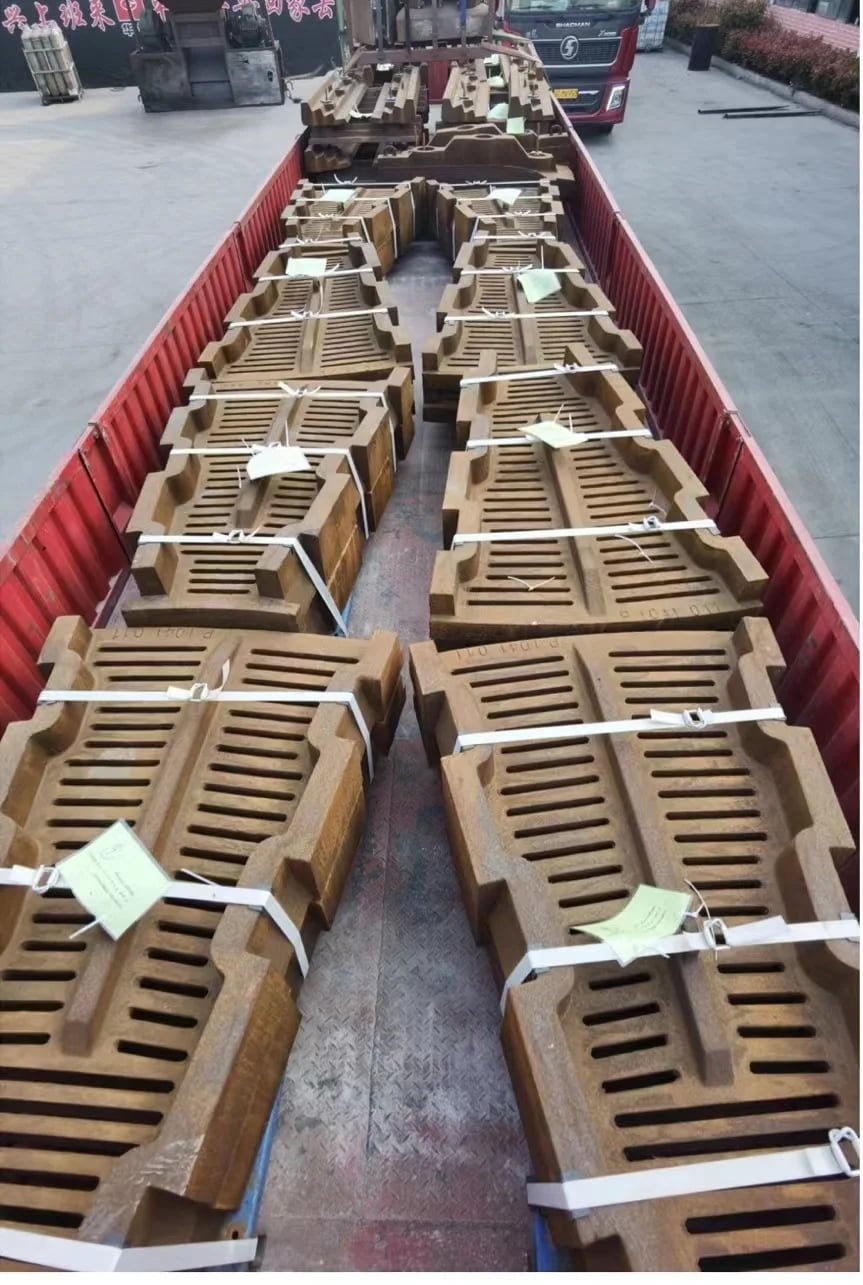
Grinding media and mill liners are mechanically coupled systems. Optimizing them from separate suppliers with no shared technical view leaves significant circuit efficiency on the table — in large operations, that gap is measured in millions per year.
A System, Not Two Products
Most mining operations procure grinding media from one supplier and mill liners from another. Both arrive at site, are installed by the same maintenance team, and are expected to work together — despite having been engineered in isolation by suppliers with no knowledge of each other’s designs.
The result is a grinding circuit optimized at the component level and under-optimized at the system level. This is not a marginal problem. In large-scale comminution circuits, the gap between component optimization and circuit optimization is measured in percentage points of throughput — and in operations processing millions of tons per year, each percentage point is worth millions of dollars.
How the Two Systems Interact
The mill liner and the grinding charge are mechanically coupled. The liner profile — wave height, face angle, spacing — determines how balls are lifted, how they cascade, and where they land. This directly controls three things.
Ball trajectory and impact point. A high-lift liner profile throws balls to a steeper trajectory, increasing impact energy at the toe of the charge. This is beneficial for coarse-feed, hard-rock applications where impact breakage dominates. The same profile in a fine-grinding application generates unnecessary impact energy, accelerating liner wear and increasing the risk of media fracture.
Effective grinding volume. As a liner wears from its designed profile to a flatter profile, the lifting action deteriorates — balls slide rather than cascade, grinding efficiency falls, and energy consumption per ton of product rises. The rate at which the liner profile degrades is directly affected by the hardness and size of the media in contact with it.
Energy efficiency. The combination of media size, ball density, and liner profile determines how efficiently grinding energy input converts into useful comminution work. A mismatched combination wastes energy on unproductive ball motion.
The Failure Mode We Call “Profile Lag”
The most common pattern we see when taking over integrated liner and media management from fragmented suppliers works like this:
A new liner is installed with a profile optimized for the media size and charge ratio in use. The liner begins to wear and the profile degrades. At a certain point — typically well before liner replacement — the effective lifting action falls below the threshold that keeps ball trajectory matched to the designed impact zone. Grinding efficiency falls. Energy consumption rises. Nobody connects this to liner wear because liner replacement is managed on a calendar schedule, not a wear measurement schedule.
Meanwhile, the media supplier is questioned about wear rate performance, which may also have shifted as the liner profile changed the ball motion dynamics. Both suppliers defend their own product. Neither is measuring the system. The operation absorbs the loss.
What Integrated Management Makes Possible
When the same technical team manages both liner and media specification, several things become possible.
Cross-system wear tracking. Liner wear rate and media wear rate are tracked simultaneously. When liner profile degradation accelerates media wear — through increased ball-to-ball abrasion on a flatter profile — it shows up in both datasets, and intervention can happen through profile refresh, media size adjustment, or both.
Matched specification from the start. Liner profile, wave height, and face angle are specified with knowledge of the media size distribution being designed simultaneously. Ball trajectory at the designed liner geometry is modeled, and both specifications are aligned before manufacturing.
Coordinated maintenance windows. Liner replacement and media recharge schedules are planned together rather than independently, reducing maintenance frequency and ensuring new liners are never installed into an inconsistently worn charge.
The Order of Magnitude
For a processing plant operating a SAG mill and two ball mills at 5 million tons per annum: a 2% improvement in specific energy consumption at $0.08/kWh and 14 kWh/ton represents approximately $112,000/year in energy savings alone. A 0.5-percentage-point reduction in breakage rate (2% to 1.5%) at 3,000 tons/year media consumption represents $45,000/year in direct media cost savings, plus associated scats handling and liner impact reduction. A 5% improvement in circuit throughput from reduced downtime and improved grinding efficiency, at $100 recovered value per ton, represents $25 million/year in additional revenue.
These are conservative estimates. The point isn’t the exact figures — it’s the scale.
Why Most Operations Don’t Do This
Not because the benefits are unclear, but because the coordination required across the traditional multi-supplier model makes it impractical. If a liner supplier has never spoken to a media supplier, circuit-level optimization isn’t possible.
One technical team. One data stream. One accountability. That’s what makes it practical.